

Български инженери поемат сложен ремонт на 66-годишна ВЕЦ в Гърция
June 15, 2026
Eng. Yordan Kiryakov: In the Power Sector, Cheap Today Costs Dearly Tomorrow
June 15, 2026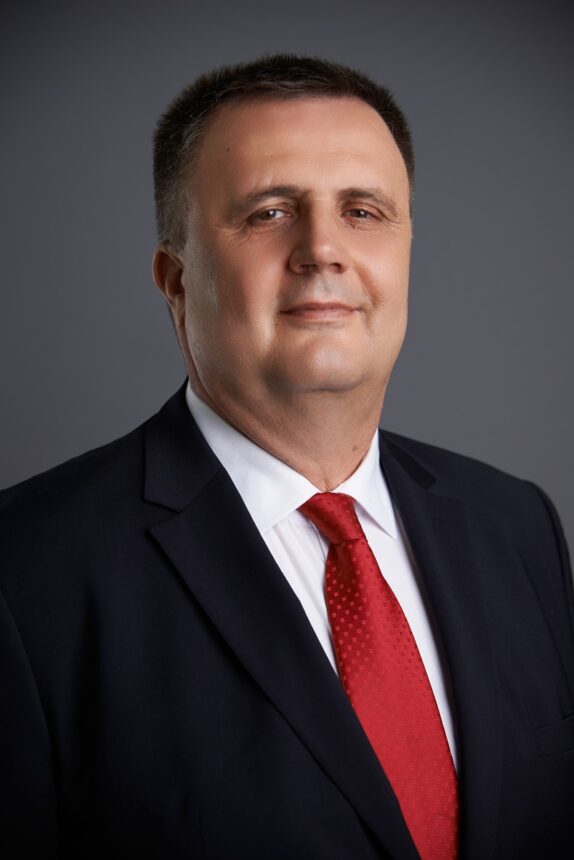
Meet Eng. Krasimir Kolev, Managing Director of CERB VEM and member of the executive leadership team at CERB Group – Bulgaria’s leading enterprise for the maintenance of major power generation assets. CERB VEM is the oldest division within the CERB Group, possessing extensive expertise in the repair, overhaul, and rehabilitation of rotating electrical machines.
Krasimir Kolev is responsible for the management, planning, and coordination of the Rotating Electrical Machines (VEM) division. His core focus centers on team leadership, operational optimization, and quality assurance. He actively contributes to the company’s strategic development, executive decision-making, and partner relations.
Blitz Interview with Krasimir Kolev
What were your favorite childhood activities, what did you want to become, and how close is that to your current profession?
Since childhood, football was my greatest passion. I started in the second grade when my father enrolled me in the CSKA youth academy. I often played against boys two years older than me, which built me up both physically and mentally. I played actively until the 11th grade as a center-back, and my childhood dream was to become a professional football player.
At a certain point, however, I had to choose between the National Sports Academy and the Technical University. The desire to develop as an engineer prevailed, though I continued playing football at an amateur level. What sports gave me proved invaluable for my professional life: discipline, perseverance, and competitiveness. I learned never to give up and, above all, to work “for the sake of the team” – a principle I live by today when managing teams.
What do you teach your children (or what do you believe is important for young people to be taught)?
I have a 25-year-old daughter who holds a good position in a major European company, and I am very proud of her. Until she turned 18, I “taught” her more actively, but today I listen to her more and only offer advice when asked. I try to pass on the lesson to invest less emotion into work and to be patient. Young people today want everything to happen instantly, but a real professional path doesn’t work that way. To be honest, I was exactly the same at her age. Perhaps the most important lesson is that success comes with time, consistency, and a balance between ambition and patience.
If you could go back to the first day of your career, what advice would you give yourself?
I would go back to my very first day as a salesman in 1992 and tell myself: “Relax, don’t rush to prove everything all at once.” I would remind myself to listen more to the experienced people around me, as I later had the chance to do at Electroimpex, where I learned my most valuable lessons. Also, not to be afraid of mistakes, because they are inevitable; they move you forward if you learn from them. And most importantly: be patient, keep emotion out of decisions, and think long-term. This is something I only truly grasped over time, but it makes an enormous difference.
If you could switch professions for a single day, what would you try?
If I had to step out of the engineering world completely, I would choose a profession with immediate results and direct human connection – for example, a chef in a busy restaurant. It involves working under intense real-time pressure, team coordination akin to a well-oiled industrial system, and instant customer feedback. It would be fascinating to see how split-second decisions are made without lengthy analysis.
If I were to stay closer to strategic thinking, however, I would try being an aircraft pilot – where decisions are critical, there is no room for error, and a perfect combination of theory, experience, and intuition is required. I am drawn to professions where consequences are clear immediately, because that offers a very pure perspective.
What is the hardest “No” you have ever said to yourself?
The hardest thing for me has been saying “no” to the impulse to act quickly and emotionally when I am convinced I am right. In our business, during tense negotiations or complex technical disputes, the first instinct is often to respond sharply. The toughest internal “no” for me has been: “Don’t act now. Wait!”
Recently, I had an instance where I let emotion get the better of me; I overstepped and made a mistake. I apologized, the other party accepted, and it was a good lesson. Pausing for a moment instead of insisting on being right at all costs requires immense self-control, but it always yields a better outcome.
When was the last time you asked someone for help, and what was it for?
I am not ashamed to ask for help. In my work, this happens when I lack sufficient data, local context, or specific expertise that needs to be clarified with the client. In those moments, helping simply means asking clarifying questions instead of guessing blindly.
On a personal level, it is the same – the most powerful help is not emergency response, but preventive action. It consists of asking for a second opinion or vetting an idea before executing it. The most valuable help is the kind sought during a moment of uncertainty — before it escalates into a crisis or a problem.
If AI were doing your job, what would it handle better, and what wouldn’t it?
Jokingly speaking, AI would probably be best at maintaining the 5S system. All jokes aside, our repair, engineering, and service business is extremely dynamic. Many decisions depend on details discovered on-site in the middle of a job, and that is exactly where human experience and intuition hold the upper hand. Artificial intelligence would be excellent at structured tasks like data analysis, documentation, and optimization. However, when diagnosing complex technical issues in a real-world environment, the “key to the puzzle” often lies in tiny contextual details that algorithms struggle to capture.
Furthermore, AI is powerless in team management – a personal approach, building trust, and understanding human motives cannot be replaced, especially today when skilled labor is in short supply.
If you could invite three people from the past, present, or future to dinner, who would they be and what would you ask them?
The first is Nikola Tesla. I would ask him what the most misunderstood limitation in electrical engineering is today, and which of his ideas back then were simply too far ahead of their time.
The second is Leonardo da Vinci – a true systems thinker, a quality often lacking in modern technical industries. From him, I would want to learn how he approaches complex systems without sufficient data, and how he would teach people to observe machinery so they can see problems before they occur.
The third would be an anonymous engineer from the future, living in a world of full automation, robotic repairs, and predictive diagnostics. I would ask him how the role of humans has transformed by then, what remains as true value for companies, and on a practical note — what he would do today, in 2026, if he knew what the industry would look like in 20 years.
If you had to start completely over – no title, no money, no contacts – what is the first thing you would do?
If I were starting from scratch, I wouldn’t think about a “big break” — that is a mistake that delays many people. The first step is purely practical: securing a quick, albeit small, cash flow. Without a baseline income, every decision becomes panicked and short-term. Therefore, I would first choose a skill that can be monetized immediately — physical labor, writing, design, it doesn’t matter, as long as there is demand. You don’t need to be a top expert; you just need to be useful. I would start offering that service to small businesses that very day, without waiting for a “perfect portfolio.”
While those initial revenues came in, I would invest time in strategically upgrading the exact skill people pay the most for. I would observe the market – wherever people hate doing something, there are problems, and consequently, money. Only after securing a stable small income would I think about business concepts and scaling. In short: first, you buy yourself time with a small income, and then you use that time to build something larger.
For you, success is…?
From a business perspective, success is not just about having work or reacting quickly to breakdowns. It is a state where the company is sought after for its trustworthiness and predictability, and clients plan their maintenance in advance instead of calling in a panic. Success is when machine downtime is measured in hours rather than days, revenues stem from long-term contracts, and the physical repair is merely the final step after successfully preventing a failure. For a company like CERB, this means transitioning from a “repair vendor” to a “reliability partner” – where the client views us not as an expense during an emergency, but as the reason emergencies don’t happen.
Tell us about your personal history and professional path leading to your current position. What was your first job, and what did it teach you?
I graduated from the Technical University with a degree in Mechanical Engineering Technology and Machine Tools, specializing in Production Organization and Management. As I like to joke, I studied to be a director. Over the years, I worked much more as a commercial manager and project leader than strictly as an engineer, but my education always served me well.
My path began in 1992 with three years in the wholesale and retail trade of beer and soft drinks. This taught me my first useful lesson regarding market dynamics and financial liquidity. After that, I spent a year working at a currency exchange desk, which broadened my view of financial instruments and foreign exchange operations.
The major pivot toward the power sector came in 1997 at Electroimpex, where I stayed for eight years. There, I gained my most substantial experience under the wing of highly seasoned colleagues. I learned how to price complex facilities like hydropower plants and substations, negotiate deals, and master contract language. The most valuable lesson back then was the sheer importance of patience and emotional control in business.
In 2005, I became Commercial Director at ELPROM ZEM, which was then the country’s sole manufacturer of large rotating electrical machines and hydrogenerators. My father had spent 20 years there as General Director, earning immense authority, and eventually retired from the company. At ELPROM ZEM, I assumed serious strategic responsibility, and among our major projects was the Tsankov Kamak HPP.
Having established a solid reputation in the industry, I received an invitation from CERB Group. I have been here for 16 years now as Head of the Rotating Electrical Machines Division and Managing Director of CERB VEM, applying my technical and managerial experience on a much larger scale. Lately, I feel that my reputation is working for me, which is the finest proof that I haven’t let people down over all these years.
What do you devote the most time and attention to in your work today?
I dedicate the most time to people. I personally know everyone on the team, their families, their children, and grandchildren. Every day we plan tasks, monitor deadlines, quality, and team availability.
Currently, we employ four workers from Uzbekistan, as well as four deaf-mute colleagues. The Uzbek workers are currently learning to lay stator windings, but they are exceptionally dedicated, and I am delighted with them. Communication is a challenge since they do not speak Bulgarian and only some speak Russian, but we manage. We have provided them with living accommodations on our premises; they learn quickly, and this has quite literally saved us during the current labor shortage crisis.
I am genuinely proud of my deputies and team members. A few years ago, one of our deaf-mute employees stopped me, tapped my shoulder, and used sign language to ask what was wrong because I looked visibly worried. Jokingly, I signed back that I felt like doing hara-kiri. He sat down next to me and signed to ask what urgent tasks needed to be done. I told him to go home, but he literally did not leave the facility for three days until the entire job was completed. Our deaf-mute colleagues perform true feats of bravery in the workplace. And frankly, they are not the only ones!
Our team fluctuates between 33 and 45 people – I have 8 engineers and technical staff, and about 25 workers ranging in age from 25 to 66. We have become very international: we have a young engineer from Ukraine with two children, individuals from Uzbekistan, and CERB also employs staff from Nepal and cleaning personnel from the Philippines. Interestingly, our oldest employees are women. We have an incredible colleague, Yordanka, who reached retirement age two years ago. At the time, I straight up told her she would only leave after I myself retired. She is an exceptional woman of high principles. She has been working at CERB since before its privatization. She knows everything inside out; she is more of an accountant than the Chief Accountant herself.
We cope with the labor shortage primarily by hiring personnel from abroad. The regulations for attracting 11th and 12th-grade students through dual vocational training are currently very cumbersome. Out of ten students who came to us, only one remained, and he has been working here for two years now. I don’t know when the state will step in with functional solutions to this issue…
If you had to describe the company in a few words, what would you say? What more would you want people to know beyond its products and services?
CERB VEM is a dynamic and responsible organization where initiative, open communication, and investment in employee development are highly valued. Our people constantly work on complex and fascinating sites. For example, my first deputy, the production manager, joined us as a 22-year-old student. Today, he is 35 and serves as my “right hand.” This September, he is deploying as the project manager for a major contract in Greece.
Over the past two years, serious repair and rehabilitation projects have also emerged within Bulgaria, whereas previously we worked almost entirely for foreign markets. We recently repaired hydrogenerators from the Krichim HPP, Devin HPP, as well as the Boyana HPP – one of our oldest power plants, which still operates with its original century-old equipment. I often joke that if it weren’t for our long years of project work in Greece, my colleagues and I in Bulgaria probably wouldn’t even know each other.
Our latest massive Greek project, won after a major standalone bidding battle outside of any consortium, involves repairing three 25 MW generators at the PLASTIRAS HPP near Larissa. The plant was built half a century ago and has never been overhauled until now. The project is an enormous challenge and will be executed in phases during operational “windows” between 2026 and 2027 (September–November and February–April), engaging the majority of our personnel.
What does it take to be successful in the company – what values, skills, and experience is the company looking for?
To succeed here, responsibility, teamwork, integrity, and forward-thinking are paramount, rather than just blindly following instructions. We look for people with analytical thinking, strong communication skills, and an intense desire to learn.
Since we are a repair enterprise, we very often have to improvise outside the box. Two years ago, we had to repair the largest generator at the power plant on the island of Lesbos, which also powers the NATO military base there. The other bidders pulled out due to the sheer complexity of the contract. Beyond the repair itself, we had to reinforce floors and ceilings, construct a 150-meter rail track, and fabricate a custom frame just to extract the 20-ton stator from the building. The overhaul took us six months, but we succeeded.
In the future, digital skills and automation will grow increasingly vital, but in our industry, the ability to work with one’s hands will undoubtedly endure. When manufacturing a brand-new machine, everything follows a blueprint and is straightforward. During a repair, however, every single machine is worn out differently. To apply insulation materials correctly, you have to feel the surface with your hand and apply imagination — something artificial intelligence cannot yet replicate.
How do you choose and what do you value in your leadership team?
When selecting leaders, mindset and daily conduct are just as critical to me as professional skills. I look for people who take ownership, make decisions calmly and constructively, and know how to lead with respect rather than pressure. I value the capacity to see the “big picture” rather than just the immediate task. A leader must act with integrity in difficult situations and champion collaboration over competition.
In our division, we literally throw people into the deep end. New hires begin learning directly on-site from veteran masters and engineers. We continuously invest in qualification – we enroll workers in various courses; for instance, there is currently a massive shortage of crane operators due to the construction boom. Meanwhile, we send our engineers at least two or three times a year to leading international European trade fairs, such as CWIEME in Berlin and Coiltech. There, they familiarize themselves with the latest innovations, new materials, and manufacturing technologies for electrical machines and windings.
Furthermore, for over 10 years, our technical team has been attending lectures on the diagnostics and servicing of large machinery conducted by EASA – one of the most prestigious American organizations in the electrical apparatus industry, boasting a 50-year history. When we became members 15 years ago, we were among just 20 international companies represented, whereas today we are part of a network of over 120 companies. We discuss various technical cases and regulations. The contacts we forge at these international forums are invaluable. In today’s complex geopolitical landscape, these exact connections save us. Everything moves rapidly: “Do you have this material?” – “Yes, I do.” – “Ship it to me, I’ll return it to you in three months.” And just like that, the repair stays on schedule.
What lies ahead for your industry – what are the most crucial trends and challenges? How is your company preparing for the future?
Our industry is undergoing a profound transformation driven by decarbonization and digitalization. The biggest shift under the banner of Industry 4.0 is the transition from reactive repair to predictive maintenance based on data and prevention. Through sensors, IoT, and AI, we can now diagnose vibrations, temperature, and insulation, catching defects in their infancy and preventing catastrophic failures. Service companies are progressively stopping being mere “repair shops” and are turning into technological partners to businesses.
At the same time, the repair market remains highly competitive. Currently, manufacturing a new high-voltage motor takes between 10 to 12 months. The truth is, there are simply no workers in the market to build them. It is a massive achievement that we have managed to fight for and execute major overhauls on such motors at CERB in just 75 days. If a client decides to buy a new one, they have to wait up to 10 months and pay a much higher price. There is another critical factor – certain legacy motors are no longer manufactured at all. Modern models are superior, but they feature different physical dimensions. Many thermal power plants and large chemical factories utilize older infrastructure and insist on a machine of the exact same footprint. This is precisely where our advantage as a repair enterprise lies: our overhauls are more cost-effective, the asset runs like new, and it returns to service many times faster.
A repair typically costs between 40% and 60% of the price of a new machine, and for large-scale equipment, it is far faster than sourcing a replacement. This advantage is compounding due to expensive logistics and volatile global supply chains. Today, we don’t do “just a repair” anymore; we modernize — incorporating higher-grade insulation, boosting energy efficiency, and optimizing load capacities.
The market is also expanding into new applications like renewable energy (wind and solar) and EV charging infrastructure, which demand specialized repair services. Naturally, the greatest challenge facing us all remains an aging workforce and the severe shortage of qualified electromechanical technicians.
CERB is preparing for this future by expanding its portfolio from traditional repairs toward lifecycle engineering solutions. We are investing heavily in digitalization, vibration diagnostics, and online monitoring, allowing us to offer subscription-based services.
A great example in Bulgaria is our work with Toplofikacia – Razgrad (District Heating Razgrad), where we operate precisely on a subscription basis. They became convinced that a purely preventive inspection is not enough. We had a case where we were called to repair their generator, but it turned out the issue lay elsewhere. We recommended exactly what steps to take, they executed them, and currently, their equipment operation is excellent.
Unlike Greece, however, where planned maintenance is the standard, such examples in Bulgaria remain sporadic. Therefore, CERB is strengthening its international footprint, specializing in niche segments with higher margins (heavy industry and power generation), and plans to roll out 24/7 emergency service lines.
The next 5 to 10 years will bring fewer “emergency repairs” and far more strategic planning. The industry will not disappear, but it will change radically: from reaction to prevention, from pure manual labor to smart technologies, and companies – from simple vendors to long-term reliability partners.
Source: Jobs.bg