

CERB Receives Second Consecutive Award at the National ‘Casting of the Year’ Competition
June 15, 2026
Хладилник от Солун, или какво става с екотаксите
June 19, 2026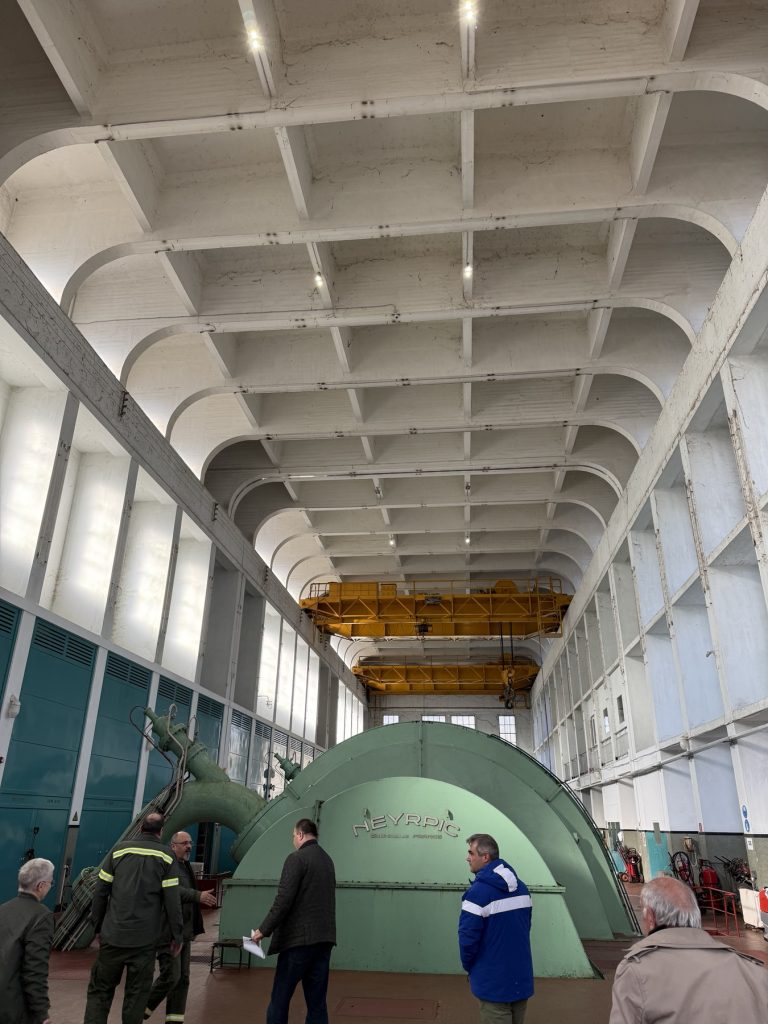
CERB Wins Greek PPC Tender to Modernize Three Generators at Plastiras HPP
Bulgarian engineers will repair and modernize the 66-year-old Plastiras Hydroelectric Power Plant (HPP) in the Greek region of Thessaly. Central Energoremontna Baza (CERB) won the tender issued by the Public Power Corporation (PPC) — Greece’s equivalent to Bulgaria’s National Electricity Company (NEK) — competing against a major Italian company in the sector. The project involves repairing three 47 MW generators and upgrading their capacity by up to 10 percent. Core operations are scheduled to begin in September and will be executed in phases running through 2027.
The rehabilitation work will be carried out strictly outside the irrigation season, as the reservoir’s water is vital for irrigating the Thessalian Plain. This makes the project schedule highly dependent on local agricultural needs, turning the contract into a complex engineering and logistical challenge.
The three hydrogenerators at Plastiras HPP feature a rare horizontal configuration equipped with two turbine runners — one on each side of the shaft. Moving away from the standard practice where plant personnel handle preliminary disassembly, the Bulgarian specialists will manage the entire process, including full dismantling and rotor extraction.
CERB VEM’s core technical team will deploy on-site in Greece, with the chief engineer remaining stationed there for three months. The workforce comprises seasoned hydrogenerator repair specialists with extensive tenure at the company, including four professionals from Uzbekistan and two deaf-mute workers.
“Greece consistently implements a policy of preventive maintenance and scheduled overhauls in its hydropower sector. Naturally, grid failures cannot be entirely ruled out in any power system, but following ongoing asset condition assessments, between two and four generators are integrated into modernization programs annually,” commented Eng. Krasimir Kolev, Managing Director of CERB VEM.
According to Kolev, NEK has also been increasingly adopting a similar strategy over the past two to three years, shifting focus toward planned maintenance and equipment modernization alongside reactive troubleshooting.
Kolev also highlighted a critical regulatory difference between the two countries regarding material price adjustments. In Greece, indexation is structured directly into procurement contracts, whereas in Bulgaria, it exists only as a statutory provision in law. “In Bulgaria, 10 to 12 months typically elapse between winning a tender and the actual launch of a project. Over the past year alone, the price of copper — a primary commodity for these repairs — surged by over 50 percent,” he added.
Plastiras HPP generates between 220 and 300 GWh of electricity annually. The eponymous artificial lake is located within a Natura 2000 protected zone and is a popular tourist destination. The concept for the reservoir emerged in the 1920s following a devastating flood, and the project was realized 40 years later by the Prime Minister at the time, General Nikolaos Plastiras.
Plastiras HPP is managed by Amalia Stafila, the only female plant director in Greece. Having managed the facility for years, her stewardship ensured that the complete historical technical documentation remained fully preserved. This availability is a rarity in such tenders and will significantly streamline the preparation and execution of the overhaul.
CERB is Bulgaria’s oldest enterprise dedicated to the diagnostics, repair, and maintenance of large electrical machines and equipment, and remains the only specialized facility of its kind on the Balkan Peninsula. Founded 77 years ago, the company has repaired and modernized over 10 hydroelectric plants for Greece’s PPC since 2008. This new contract at Plastiras HPP further solidifies the footprint of Bulgarian engineers in the Greek hydropower sector.
Source: Standart News