

Meet Krasimir Kolev, Managing Director of CERB VEM and Executive Team Member at CERB Group
June 15, 2026
CERB Receives Second Consecutive Award at the National ‘Casting of the Year’ Competition
June 15, 2026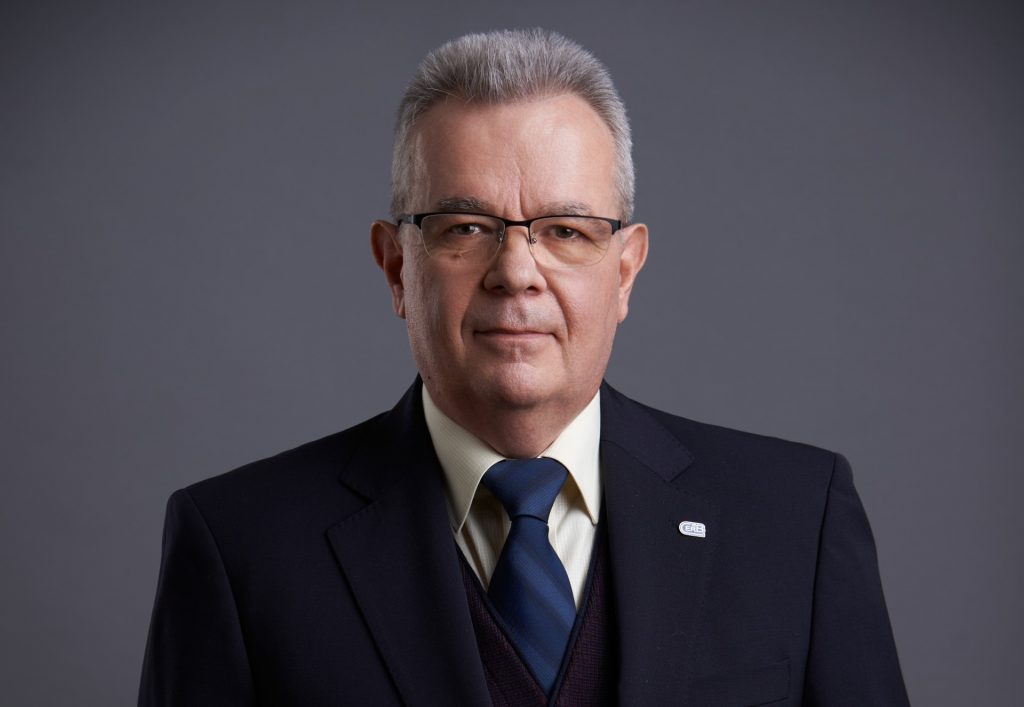
Eng. Yordan Kiryakov is an electrical engineer and an expert with over 35 years of experience in the management and operation of power systems. His career spans key structures such as NEK (the National Electricity Company) and the country’s electricity distribution companies. Today, he serves as the strategic link between leading European and global manufacturers and the domestic energy sector, specializing in the supply of critical equipment and the engineering of complex projects. Eng. Kiryakov is among the few experts in Bulgaria who combine hands-on operational experience with deep knowledge of the global electrical equipment market.
You started at CERB “as a joke,” and 12 years have already passed. How has the “game” in the energy equipment market changed over this time?
I started on April 1, 2014, and here we are today — the joke turned into a serious journey. The biggest change is the aggressive market entry of products from Turkey and China. Years ago, there was a clear preference for European origin. Today, private investors look for speed and low cost, but the paradox is that even large state-owned enterprises have begun to allow this.
Perhaps only the Kozloduy Nuclear Power Plant makes no compromises with equipment requirements, for the sake of energy security. The problem with cheap equipment lacking reliable servicing is immense. Personally, I bet on European quality — I tried working with a Chinese supplier once, but when you receive a product that lacks the exact details you explicitly insisted on, you realize that price isn’t everything.
You say that you often step into the role of a “detective” when working with clients. Why is it so difficult to buy a transformer or a circuit breaker today?
Because the client often wants a solution but does not know how to define it. We have two extremes. On one side are the large procurers with over-specifications that are sometimes technically unnecessary and only inflate costs and delay the process. On the other side are the private investors who lack trained personnel. I have personally spent months just clarifying parameters.
Here is an example: they order a neutral grounding resistor. A fundamental question is how it will be connected — via cable or overhead line? They overlook this “detail,” yet it is essential. If I do not do my job as an engineer and demand the complete documentation, we risk delivering something that is unusable. My role is to bridge these information gaps.
You have been on both sides of the barricade — in state-owned energy giants and now in the private sector. Where is it more difficult?
Before, I was the client and dealt primarily with suppliers. Now, I am an “intermediary station.” I have to translate the needs of the Bulgarian client into the language of the manufacturer in Germany, Poland, or Canada. I must filter the information — feeding the factory with exactly what it needs so as not to confuse them, while also guaranteeing that the client receives exactly what will work for their specific application. My experience in power system operations helps me tremendously — I don’t just sell equipment; I know how it will perform within the grid.
Which countries and technologies do you prefer to work with to ensure peace of mind regarding quality?
We work primarily within the European Union — Slovakia, the Czech Republic, Italy, and Austria. Currently, our largest deliveries of transformers and shunt reactors come from our partners in Poland. We are also representatives of a Canadian company that manufactures high-precision measuring instruments used in nuclear, thermal, and hydroelectric power plants. Additionally, we supply German equipment tailored for railway infrastructure needs. When you stand behind proven manufacturers, you know you are offering reliability.
What is the future of this business in the era of artificial intelligence and digitalization?
New information flows will accelerate processes, but only if the client knows what they are looking for and how to find it. Since specialized experts are becoming increasingly scarce, professionals like us will always have a place in the future. There will always be a need for someone to “rephrase” the chaos into a precise technical task. Our job is to guarantee that the system will work tomorrow, not just that it was cheap today.
More: https://cerb.eu/european-industry-under-pressure-from-china-and-turkey/?lang=en