

ЦЕРБ с второ поредно отличие от националния конкурс „Отливка на годината“
May 30, 2026
Български инженери поемат сложен ремонт на 66-годишна ВЕЦ в Гърция
June 15, 2026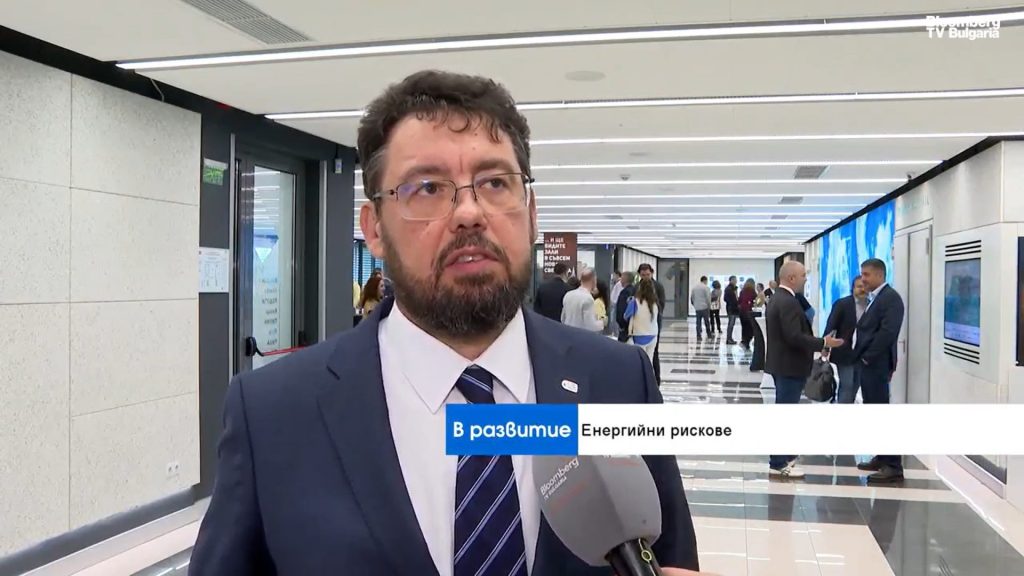
Photovoltaics are a key element of energy independence and can lead to significant economies of scale. In Bulgaria, the following trend is already being observed: during sunny hours – from about 8 AM to 4-5 PM – the price often drops to zero, and this will be the case all summer long, while batteries will help smooth out the peaks. I expect that once they become operational this summer, all else being equal, the price of electricity in Bulgaria will be exceptionally low. This was commented by Dr. Eng. Dimitar Beleliev, Chairman of the Bulgarian Association of Electrical Engineering and Electronics (BASEL), in an interview for the show “V Razvitie” (In Development) with host Antonio Kostadinov, conducted during the “Energy of Tomorrow” conference.
“Now, with the introduction of batteries, and provided we don’t manage to disrupt the entire system, I believe that next year prices will definitively return to acceptable levels, just as they were before the crisis in Ukraine.”
Bulgaria’s Energy Security and the Role of Base Capacities
In addition to batteries, the so-called “rotating capacities” (spinning reserves) are also necessary for balancing the system, and they must either be restored or newly built. They provide stability to the system, and even if they are not used constantly, investing in them is an investment in energy security and grid frequency.
“At the moment, we are falling into a situation where there is no one to provide frequency to the grid, especially in certain regions, such as Dobrich. Urgent measures must be taken to resolve this issue so that the utility of batteries and renewables as a whole can truly be felt.”
Geopolitical Tension and Europe’s Energy Security
Regarding the tension in the Strait of Hormuz and the Persian Gulf, Beleliev stated that the situation is serious, but it is not entirely negative for Europe.
“What is happening is actually extremely positive for Europe. First, we will realize that liquid fuels are something we need to move away from more aggressively, not just for ecological causes, but for energy independence. Therefore, the transition to electric vehicles and all other forms of electrification is extremely beneficial, and has now become a matter of security and cost,” he believes, adding that Europe must seek greater self-reliance and stop depending on external political factors outside the continent.
The Green Deal – A Matter of Energy Independence
According to Beleliev, the EU’s Green Deal suffers from poor marketing because it is presented as a decarbonization policy, whereas it is actually about energy independence.
“There is no other stable source, with the exception of nuclear energy, that can secure the billions we are currently spending on electricity imports and the billions we could invest in much different and more efficient projects. For me, the Green Deal is one of the best things that has happened to Europe in recent decades regarding the energy sector.”
Can Bulgaria Attract Data Centers and AI Infrastructure?
Rather not – at least not on the scale that is often talked about, the interviewee stated. Large data centers require not only cheap electricity, but also stability, predictability, and long-term security for at least 10 years ahead, and currently, Bulgaria can hardly offer these conditions compared to other countries, he believes.
“Bulgaria could potentially win the competition for small and medium-sized data centers with a power consumption in the range of 20-30 to 50 megawatts. This is my personal opinion. I strongly hope that this time I am proven wrong.”
Watch the full commentary in the video. Source: https://www.bloombergtv.bg/a/17-v-razvitie/158586-dogodina-bateriite-shte-varnat-tsenata-na-toka-do-nivata-predi-voynata-v-ukrayna