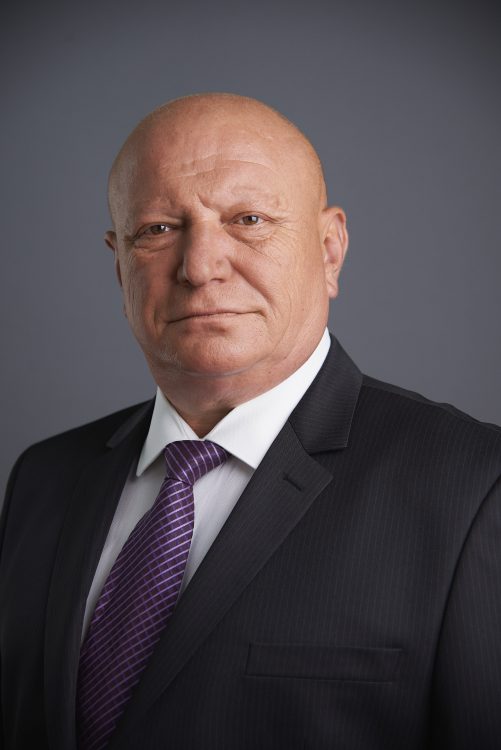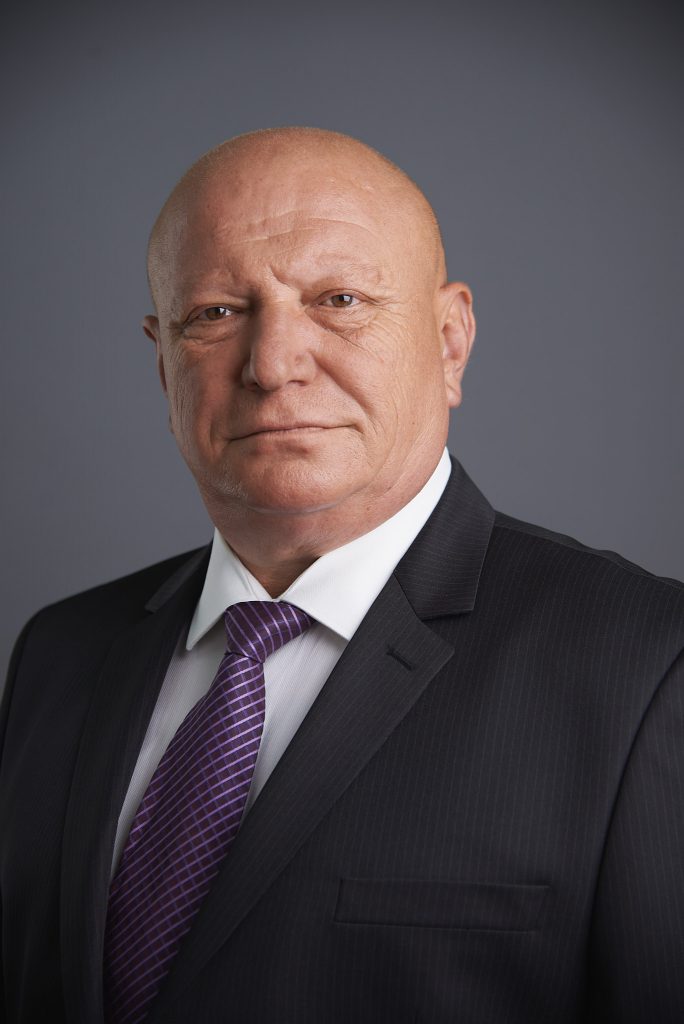


Eng. Simeon Kraynev, Director of the Substation Division at Central Energy Repair Base (CERB): Substations are like crossroads for power, but they cannot have a red light—otherwise, everything goes dark

Инж. Симеон Крайнев, директор на направление „Подстанции” в „ Централна енергоремонтна база”: Подстанциите са като кръстовища на пътя на тока, но при тях не може да има червен светофар – става тъмно
June 22, 2026
След соларния бум бизнесът все по-силно търси батерии и комплексни системи
June 24, 2026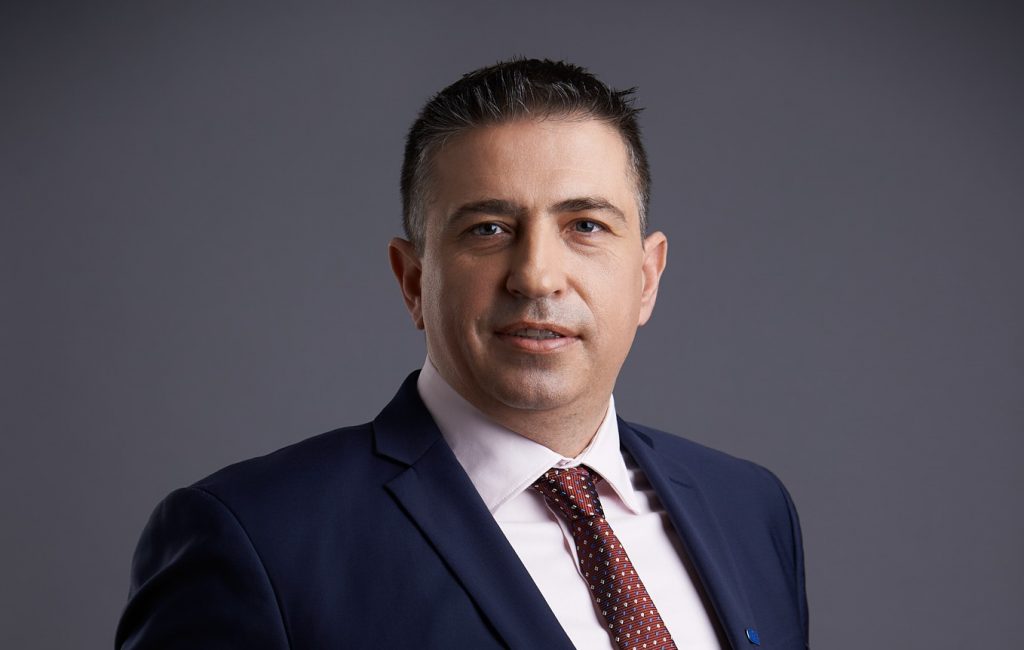
Simeon Kraynev: The energy transition we are in now will likely not happen again in our lifetime
Mr. Kraynev, Central Energy Repair Base (CERB) is the oldest power repair company not only in our country but also in the Balkans. The turnkey substation construction division is relatively new. How long have you been focusing on this activity and why?
We have been developing this division since 2022. We are engaged in the design, construction, and reconstruction of substations and high-voltage facilities for the transmission network, the railways, and the industry, as well as for the connection of new power capacities. We are already a team of over 20 people. Our goal is to be active participants in the energy transformation that is happening right now—a transformation that will likely not happen again in our lifetime.
What is the market for these services? Substations are primarily owned by the grid operators (ERPs) and ESO (Electricity System Operator); aren’t these limited opportunities?
Substations are mainly owned by the Electricity System Operator (ESO), to a lesser extent by the regional grid operators (ERPs), and by the National Railway Infrastructure Company. However, every major new power project—solar parks, wind farms, battery energy storage systems—requires a substation at the point of connection to the grid.
Why are substations important?
Imagine them as intersections in the power grid; they distribute the load. But, unlike road intersections, you cannot have traffic jams here. If that happens, everything goes dark.
So, there can be no red light at this intersection—only green?
Exactly. Substations have long ceased to be just circuit breakers and transformers. Imagine them as a high-voltage computer that allows traffic to flow continuously without stopping, thus making the grid intelligent. So, if we are to compare them to road infrastructure, we are talking more about roundabouts, interchanges, and multi-level junctions.
And you are the builders of these intersections?
Yes, we execute turnkey substation projects. We have many complex assignments. We are one of the few companies in Bulgaria that build traction substations for the railway network to power trains. This is considered the highest level of piloting in the industry because trains do not wait, and we have no room for error. We also work for industrial clients, for distribution system operators, and for the connection of new clients, whether they are producers or storage operators.
A few days ago, the International Energy Agency forecasted an accelerated shift towards electrification and fewer investments in oil and gas. This implies the need for stable and smart grids and their associated facilities. Do you possess the know-how for stability, flexibility, and security?
This is one of the reasons we headed in this direction, and it is my personal motivation. It is a rare coincidence to do something you are good at, while also fulfilling a need for the state and society. Furthermore, it is evident that electrification is the future—it guarantees both security and the goal that every megawatt in Bulgaria is one less megawatt of imported energy. To make this possible, we need a flexible distribution system where substations are a key element. For this energy transition to lead to energy independence, we need a stable grid; otherwise, it is like building a roof without a foundation. And we are laying the foundations.
You mentioned that we are in a transition that will not happen again in our lifetime. What do you mean?
It is happening for various reasons, but now we are forced to renew the grid. Over the next 10 years, there will be more construction and renovation of the entire grid—power lines and substations—on a scale not seen in decades.
You are a graduate of two universities in Germany; why did you return?
Because I love dynamism, and in Bulgaria, it is a constant state. In Germany, everything is orderly and predictable. I see enormous potential in electrification, not only for us as a company but also for our economy. However, there is a problem, and it is the current shortage of personnel. I would put it this way: if you want to buy software, you can do it in a few weeks, or even write your own. If you want to buy a machine, it will take a few months. But if you want an engineer, it takes at least five years for them to graduate and likely another five years to become a specialist. Human resources are much more scarce than equipment. On the other hand, for young people, this is one of the most secure career paths.
Why do you think so?
Everything will be electrified. It is not just about home appliances; the entire transport sector is moving in this direction, and as for artificial intelligence and data centers—someone has to supply them with power. So, electrical engineers will be the last ones left without work.
Is Bulgaria not outpacing Europe in electrification?
It is, and we must maintain the speed at which we are developing.
Is this good or not so good, given that it creates an impression of chaos?
It is ideal because we are jumping from one stage of development to the next. Some believe that there is no proper planning in Bulgaria, but in this case, we are flexible, and this allows us to adapt to increasingly rapid changes and introduce the newest technologies. By introducing them, we become leaders.
There is a boom in solar parks, followed by a sharp increase in battery installations. How are the risks to the power system from this intermittent production overcome?
To build a solar park and batteries, it takes a few months, but to build a substation that connects them and keeps them in the grid, it takes years. Therefore, substations are the limiting factor. When someone builds a large solar capacity or a battery park, they need a substation, which becomes part of the investment. On the other side, the transmission or distribution operator also needs a facility to receive this power, and for there to be no traffic jams, it must be modern. The more connections there are, in as many different locations, the more flexible the system becomes and the easier it is to manage.
How are the investors coping?
Only those who plan ahead are coping.
What demands do these turbulent changes, occurring over a year or two, place on the system to ensure it is flexible and secure? And so we don’t end up with blackouts like in Spain.
With this intermittent production, balancing is not an easy task. Batteries and hydroelectric plants help, but the most important thing is having numerous connections and the ability for rapid switching, so that optimal balance can be achieved. Investments in grids and facilities have been made in recent years, but the need is growing exponentially. In the last two years, as much power capacity has been connected in Bulgaria as in the previous decades, yet the grid has not doubled. Furthermore, we are shifting from centralized to decentralized production with many producers. Despite this, in Bulgaria, we are not only much more flexible within the system—among different consumers and producers—but we are also more flexible externally towards our neighbors; we are becoming more stable. Returning to the intersection metaphor—there should be no traffic lights, but rather interchanges, so that vehicles do not stop moving; effectively, our power system should be switchable, with substations acting as the actual switches, and through this, it can be balanced.
Do you have clients outside of Bulgaria, like other CERB divisions?
We have received inquiries, but we are not currently focused on working abroad because, for now, the Bulgarian market is sufficient for us. We are trying to develop our capacity, and in the future, we will enter the foreign market. I reiterate that over the next 10 years, new grids and facilities will be built on a scale not seen in decades. That is what we are preparing for. It is important to maintain the pace at which Bulgarian energy is developing so that we can electrify as much as possible. Electrification leads to independence and prospects for the development of all kinds of businesses, including AI and mobility.