

We work mostly abroad because maintenance there is systematically planned. Domestically, equipment is often operated until it fails

Работим предимно в чужбина, там планират ремонтите, у нас често се чака аварията
September 17, 2026
Корпоративната сигурност не е само камери и пропуски
September 30, 2026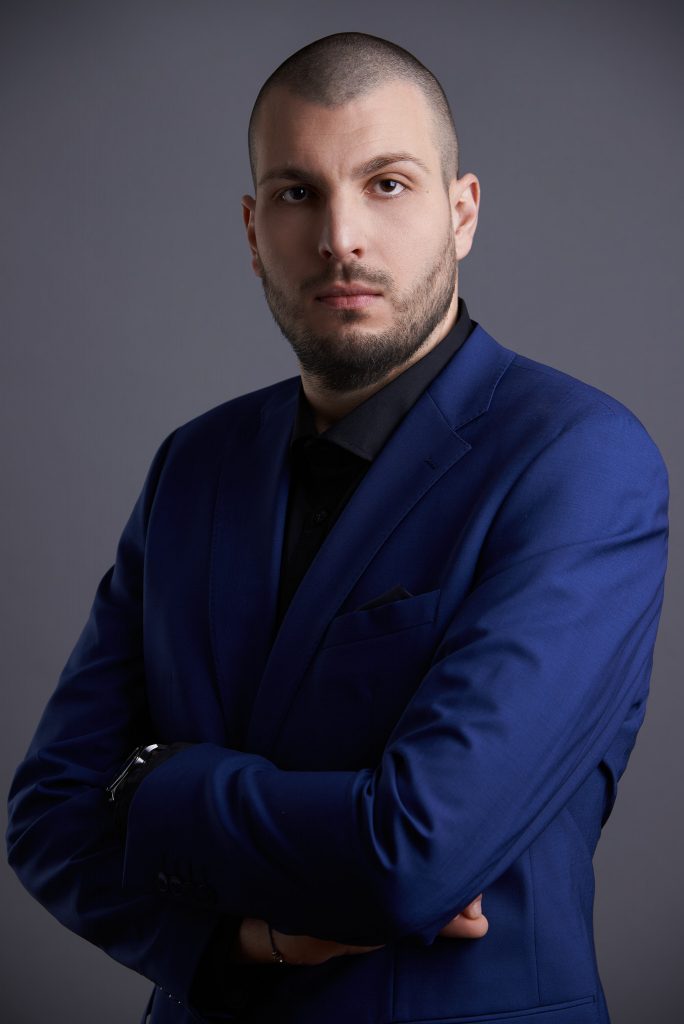
“Vibrations provide the diagnosis of a machine. One shouldn’t wait for them to reach the red zone, because the result is a breakdown that can cost millions.”
– Mr. Stoyanov, you have been with CERB Vibro Health since its foundation, right? – I have been here since the time when the company’s operations were still a division within CERB JSC. Subsequently, the activities were split into separate entities, and upon the establishment of CERB Vibro Health, I assumed the management responsibilities for the entire company.
– Central Energy Repair Base (CERB) is one of the oldest repair companies in Bulgaria, expanding across various domains over time. What is the core business of CERB Vibro Health? – Our main line of business revolves around vibration—from measurement and analysis to various types of dynamic balancing. We perform balancing both on our stationary test stands at the CERB Group facility and using our portable equipment. The latter is unique in its class, allowing us to transport it directly to any client site and balance rotating mechanisms and components weighing up to 110 tonnes on-site.
– Why is it essential to prevent excessive vibration? What effect does it have on machinery? – When a machine is operating, vibration is always present. Broadly speaking, we can categorize it into green, yellow, and red zones. In the green zone, vibration levels are normal; in the yellow zone, they become atypical; and the red zone signifies critical vibration levels. At that point, no one can predict whether a catastrophic failure will occur in seconds, minutes, hours, or days. Vibration must be monitored because it reflects the overall health status of the equipment. That is where the name “Vibro Health” comes from—vibrational health. By analyzing vibration, we can forecast with high accuracy when, where, and what might occur, allowing us to implement preventive measures before costly repairs become necessary. When an issue is overlooked, both repair costs and downtime escalate. For large industrial facilities, emergency downtime demands an immediate response.
– You work with hydro- and turbogenerators, steam turbines, electric motors, fans, and more. Is your focus primarily on the energy sector? – No, we work virtually across all industries. In the energy sector, we deal with hydro and turbine rotors, turbogenerators, and electric motors, but electric motors are equally widespread in general industry. Whenever a rotating mechanism undergoes repair or component replacement, it must be balanced. This applies to turbogenerators, small motor rotors, turbine rotors, or even wood chipper rotors. Balancing is mandatory for any rotating machinery. If it rotates, it involves bearings and vibrations that can be measured and analyzed. A simple analogy is car tires—whenever you change them, you balance them, because vibration impacts other vehicle components as well.
– How long has the company been operating? – As an independent corporate entity, since 2019. However, our equipment and personnel originate from CERB JSC, where vibration services functioned as a dedicated department. CERB was the first company in Bulgaria to establish such a division. Therefore, we are not talking about just seven years of history, but rather decades of accumulated expertise.
– How did operations evolve after becoming an independent company? – Initially, our core business remained vibration measurement, analysis, and balancing. Over time, we developed our own continuous vibration monitoring systems—built entirely on our proprietary technology, design, and manufacturing. We offer two system configurations. The compact version utilizes two sensors to deliver 24/7 vibration tracking, equipped with optional visual and audible alarms indicating green, yellow, or red zone status. The comprehensive system supports multiple sensors and channels, featuring server connectivity and remote access capabilities. This allows us to track problem progression over time—pinpointing when an anomaly started, how rapidly it deteriorated, and how the machine’s overall condition evolved. Additionally, we are the official Bulgarian distributor for two U.S. manufacturers of industrial sensors, including military-grade products.
– What do you manufacture in-house? – We manufacture our condition monitoring systems. Alongside testing, analysis, balancing, monitoring systems, and sensor distribution, we also provide comprehensive overhaul and repair services.
– What types of repair work do you execute? – We overhaul turbine equipment at power plants. Our inaugural project was completed in 2023 in Kosovo, where we successfully executed two major overhauls on units at the Kosovo A Thermal Power Plant, servicing turbines, generators, and auxiliary systems.
– Why are most of your projects located outside Bulgaria? – In Bulgaria, predictive maintenance is often treated as a low priority. Equipment is frequently operated until failure, with repairs carried out only after a breakdown occurs. While manufacturers issue strict guidelines regarding inspection, preventive maintenance, and service intervals, these are not always strictly followed domestically. In other countries, maintenance is systematically scheduled based on operating hours. As the designated overhaul interval approaches, tender procedures are launched to select a contractor. That is how we secured two contracts in Kosovo through competitive bidding.
– Where else have you carried out power plant repairs? – We have executed projects in Greece, Kosovo, Bosnia and Herzegovina, Montenegro, Serbia, Romania, and Algeria. We also operate in Bulgaria, though to a lesser extent. Last year, we successfully completed three major projects in North Macedonia, including work at their largest power facility, the Bitola plant, encompassing both partial and capital overhauls. Currently, we are in discussions with partners in the Czech Republic and Germany regarding joint ventures and subcontracting arrangements for their ongoing projects.
– What is the competitive landscape like in your field? – We benefit from a long-standing reputation and strong market recognition. Even when our commercial proposals carry a slight premium, clients recognize our capability to provide immediate response times for both warranty and post-warranty support. For major overhauls, simply completing the mechanical work is not enough—it requires guaranteed reliability, deep technical expertise, and long-term operational support after project completion.
– What are the growth prospects for the business? – The growth prospects are substantial. Our newest operational focus is the overhaul of turbogenerators, specifically generator rotors. This year, we successfully completed one turbogenerator overhaul, with a second unit nearing completion. Both are installed at Bulgarian power plants—one undergoing partial refurbishment and the other a full capital overhaul.
– What are the technical complexities involved in turbogenerator repairs? – In a thermal power plant, the turboset consists of mechanically coupled rotors. Steam drives the turbine rotors, which in turn drive the generator to produce electricity. Large utility units typically feature high-pressure, intermediate-pressure, and low-pressure turbine rotors connected to the generator rotor. Turbine rotors feature complex geometry with multi-stage blading. However, generator rotor overhauls present an even higher technical challenge—involving windings, insulation systems, and numerous precision-engineered components that require exact machining and fitting. During a capital overhaul, every layer of insulation may need replacement. Copper is a soft material that resists retaining rigid geometry during handling. Tolerances, insulation integrity, ventilation channels, and multiple operational parameters must be meticulously verified. It is an extremely high-precision discipline.
– Are there other companies in Bulgaria capable of performing such overhauls? – To my knowledge, this capability was virtually nonexistent in Bulgaria over the past 10 to 15 years. We assembled a highly skilled, cohesive team operating at the highest industry standards.
– How is the company expanding its capabilities in this direction? – We possess specialized, highly exclusive tooling and equipment. Without these specialized systems, key generator components cannot be safely disassembled or reassembled. Several of these fixtures were engineered and built in-house. Furthermore, our workshop facility features high-bay clearance equipped with heavy-duty overhead cranes capable of lifting and positioning rotors weighing over 40 tonnes.
– What is the largest machine component you have balanced? – Our primary work involves turbine rotors. However, we have also balanced large industrial mill fans abroad. While those fans have very large diameters, they typically weigh around 15 to 20 tonnes. On a routine basis, we balance rotors weighing around 50 tonnes.
– Does that require transporting them to your facility? – In some cases, yes. For example, a few weeks ago, rotors weighing 40 and 38 tonnes were delivered to our facility. In other instances, we deploy on-site. We have the capability to perform high-precision balancing both at our service center and directly within the client’s plant. We are continuously expanding our operational footprint and have no intention of slowing down. Despite challenging business environments, we continue to deliver solid performance.
About Eng. Stoyanov He graduated from the Technology School Electronic Systems (TSES) at the Technical University of Sofia, specializing in System Programming. He holds a Bachelor’s degree in Automation and a Master’s degree in Industrial Management from the Technical University of Sofia.
He joined CERB in 2016 during his freshman year at university, starting his career as a rotor balancing technician—the foundational role in vibration engineering. Throughout his tenure, he has contributed to numerous high-profile projects across the CERB Group. He has served as Head of CERB Vibro Health since 2019.Сподели