

BASEL: There Is No Way a Company Can Win a Tender and Buy Copper 30% More Expensively 6 Months Later

БACEЛ: Hямa ĸaĸ ĸoмпaния дa cпeчeли тъpг, a 6 мeceцa пo-ĸъcнo дa ĸyпyвa мeдтa c 30% пo-cĸъпo
July 31, 2026
ЦЕРБ: Енергията на истинските истории
July 31, 2026
The sharp rise in copper prices is no longer just a topic for international markets. After the key metal surpassed $12,000 per ton on the London Metal Exchange (LME), the impact is beginning to be felt in a far less visible yet critically important sector in Bulgaria – the maintenance of the national electricity grid.
The Bulgarian Association of Electrical Engineering and Electronics (BASEL) warns of the growing problem. According to the organization, the current public procurement model fails to account for sudden fluctuations in key raw material prices. Under fixed-value contracts, the risk of price escalation falls entirely on contractors. This puts severe pressure on the maintenance and repair of operating generators, transformers, substations, and power lines.
Data shows that the pressure on the sector is substantial. According to the National Statistical Institute (NSI), producer prices in the “Manufacture of basic metals” sector rose by 19.8% in April and 21.5% in May on an annual basis. In the repair of generators and power transformers, copper can account for up to 60% of the material costs, making pre-budgeted figures increasingly difficult to execute.
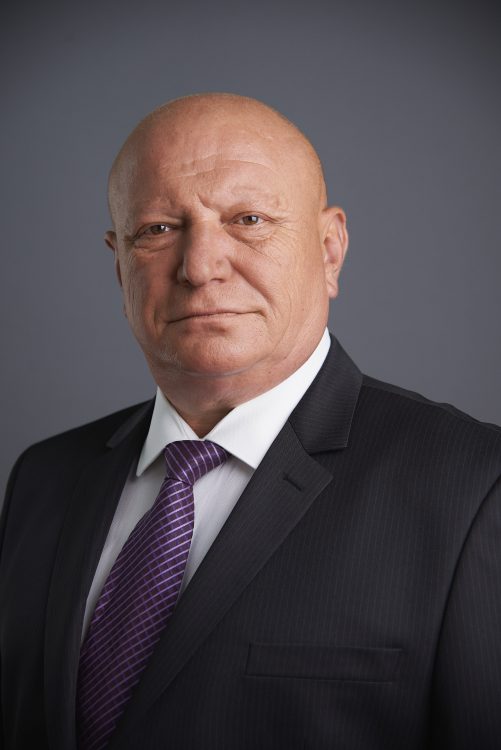
“There is no way a Bulgarian company can win a tender at one price, buy copper 30% more expensively 6 months later, and fulfill the contract without facing bankruptcy,” commented Dimitar Beleliev, PhD, Chairman of BASEL, for Money.bg.

A Gradually Accumulating Risk
Beleliev clarified that the warning does not imply an immediate threat to the operation of the power grid. “Risk does not mean power plants will stop working tomorrow. It accumulates gradually,” he explained.
According to him, the initial effect will be the postponement of scheduled maintenance, as allocated budgets will no longer cover the actual cost of materials. This could lead to a reduction in the number of companies willing to bid on such tenders. Consequently, some public procurement procedures may end up without bidders or face delays due to legal appeals.
In the short term, he believes this could lead to a backlog of unperformed repairs and a gradual shift from planned maintenance to emergency response.
“Emergency repairs are always more expensive, executed urgently under strict deadlines, and often result in longer equipment downtime,” Beleliev added.
The most affected segments are power plant generators (thermal and hydro), power transformers, substations, power lines, and distribution networks. These systems require substantial quantities of copper, aluminum, electrical steel, and specialized insulating materials.
Copper Is Only Part of the Problem
While copper is the most visible issue, BASEL highlights that pressure is also mounting from other core materials, including aluminum, electrical steel sheets, structural and stainless steel, silver, specialized insulating materials, resins, and industrial oils.
Additional stress stems from rising transport costs, energy prices, and labor expenses.
“We are not talking about a temporary 2–3% variance that a company can absorb. We are talking about a fundamental shift in contract economics,” Beleliev emphasized.
According to him, the solution is not an automatic price increase across the board, but the implementation of a “clear and transparent indexation formula.” This formula should account for the proportion of specific raw materials in a given product and mirror international commodity market indices. Should market prices drop, the mechanism would work in reverse, benefiting the contracting authority.
When the Lowest Price Costs the Most
According to the Chairman of BASEL, another major flaw lies in how public tenders are evaluated. He noted that the state frequently treats procurement as a one-time purchase, driven primarily by the lowest initial price.
This approach overlooks critical factors such as operational expenses, energy losses, maintenance servicing, spare parts availability, and total lifecycle costs.
Beleliev cited power transformers as an example. Cheaper equipment may appear cost-effective initially, but if it exhibits higher energy losses or complex maintenance requirements, long-term costs over 20 to 30 years will far exceed the initial savings.
“The lowest delivery price does not equal the lowest cost for the state,” he noted. “Our proposal is not for the state to buy more expensively, but to buy smarter by calculating the true cost society will pay over the coming decades.”
Competition from Outside the EU
In addition to raw material pressures, BASEL points to fierce competition from non-EU manufacturers. Over 60% of electrical engineering tenders in Bulgaria are won by non-EU companies. Beleliev stressed that the issue is not the country of origin itself, but the uneven playing field under which European companies compete.
“The problem arises when European enterprises compete against foreign manufacturers benefiting from state aid, cheaper financing, subsidized energy, or protected domestic markets, while enjoying virtually unrestricted access to European public procurement,” he explained.
He noted that key imports from China include transformers, inverters, battery storage systems, cables, electrical apparatus, and electronic components. Significant volumes of electrical equipment also originate from Turkey and India.
BASEL maintains that for strategic infrastructure projects, evaluations must move beyond initial pricing to reflect total cost of ownership (TCO). The organization urges the implementation of price indexation mechanisms for raw materials in public procurement and advocates for greater participation of Bulgarian and European enterprises in strategic energy projects.